
There's so much conflicting information about nutrition and perfect diet.
Eat meat. Don't eat meat. Go keto. Go vegan. Carnivore is the answer. Whole grains are essential. Whole grains are poison. It's exhausting.
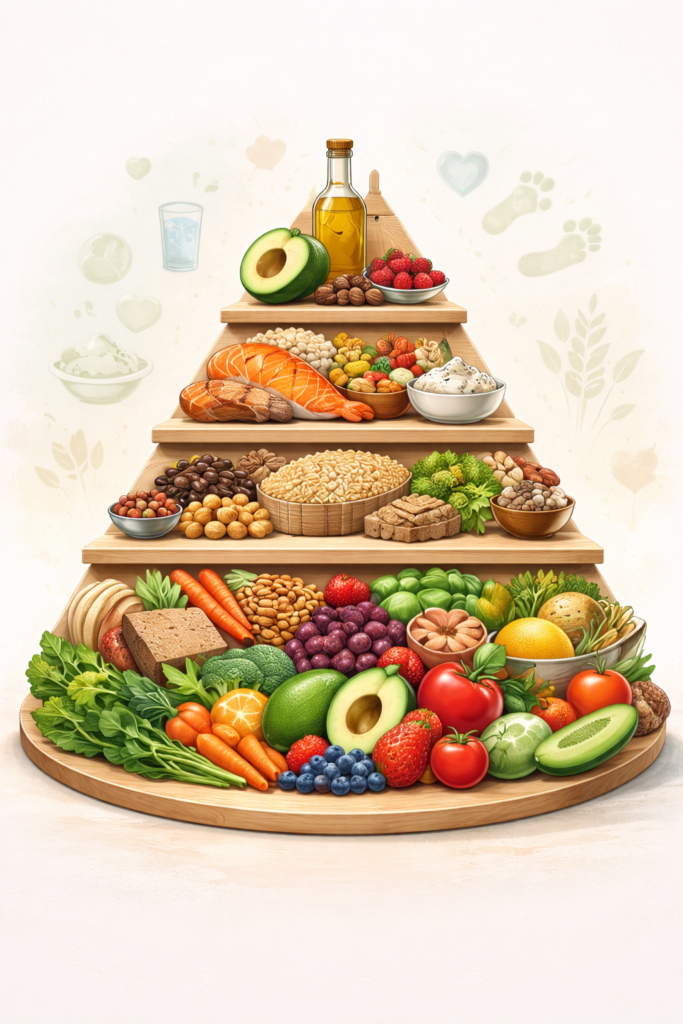
This week, the United States released their new Dietary Guidelines for Americans 2025-2030, complete with an inverted food pyramid that’s sparked intense debate. Vegetables, fruits, protein, dairy, and healthy fats now sit at the top. Whole grains are at the bottom. Some people are celebrating. Others are furious. The internet is losing its mind.
But here’s what I find interesting: everyone claims to have science on their side, yet most people are still confused.
Too many people are using emotion and political views to decide what’s the healthiest way to eat. Vegans claim the moral high ground. Carnivore advocates dismiss decades of fibre research. The processed food industry muddies the waters with cherry-picked studies. Meanwhile, chronic disease rates continue to climb.
So let me cut through the noise with something refreshing actual evidence from real human studies.
I’m not going to tell you what I believe. I’m going to tell you what the large-scale research actually shows. And here’s where I’ll probably upset people on both sides of the debate:
“Not one diet fits everyone” is nonsense.
Yes, there are individual variations in how we respond to certain foods. But the fundamentals of human nutrition are remarkably consistent across populations. There is an optimal framework for eating that applies to virtually everyone who wants to be strong, fit, have abundant energy, and live a long, healthy life.
Here’s what the research tells us.
1. Protein Is Non-Negotiable (And Most People Don’t Get Enough)
Let’s start with what should be the least controversial point: maintaining muscle mass as you age is one of the most powerful longevity tools we have.
The evidence is overwhelming. A 2022 meta-analysis published in the Journal of Cachexia, Sarcopenia and Muscle, reviewing 74 randomised controlled trials, found that increased daily protein ingestion significantly enhances gains in lean body mass, particularly when combined with resistance training.
The data consistently shows that protein intakes of 1.2-1.6 grams per kilogram of body weight per day support muscle maintenance and growth in healthy adults. For those engaged in regular resistance training, especially older adults facing “anabolic resistance,” intakes of 1.6-2.2 grams per kilogram may be optimal.
Compare this to the outdated RDA of 0.8g/kg—a number designed merely to prevent deficiency, not to optimise health. Dr. Peter Attia, one of the leading voices in longevity medicine, recommends his patients aim for approximately 2 grams per kilogram of body weight (roughly 1 gram per pound). This level supports muscle protein synthesis, recovery, and the preservation of lean mass that’s critical for metabolic health and functional independence as we age.
Now here’s where it gets interesting. Dr. Tim Spector from ZOE and the Sonnenberg lab at Stanford do brilliant work on gut health. But when it comes to protein, their messaging sometimes underplays its importance. I’ve seen suggestions that we don’t need to prioritise it—that gut health is everything.
Both matters. And here’s the truth: you can absolutely support gut health while eating adequate protein. In fact, you must eat adequate protein if you want to maintain the muscle mass that’s fundamental to metabolic health.
Can You Get Enough Protein from Plants?
Yes—but there are practical challenges.
Plant proteins are generally lower in essential amino acids and have reduced digestibility compared to animal sources. The amino acid profiles are often incomplete. For example:
- Legumes (beans, lentils) are typically low in methionine
- Grains (rice, wheat) are typically low in lysine
This is why traditional cuisines developed combinations like rice and beans (feijoa in Brazil), which together form a complete protein. This principle works.
However, here’s the practical problem: to get 2 grams of protein per kilogram of body weight from plant sources alone, you’ll need to consume significantly more total calories. An 80kg person would need around 160 grams of protein daily. Getting that from lentils alone would require over 1,800 calories just from lentils—before adding anything else to your diet.
Animal protein sources—meat, fish, eggs, dairy—are simply more efficient. They provide complete amino acid profiles in fewer calories. This doesn’t mean plant proteins are bad. It means that for most people, incorporating animal protein makes hitting optimal targets far more practical.
2. Gut Health Is Foundational (And Here’s Why Carnivore Is A Short-Term Fix)
Now let’s address the elephant in the room.
Many people report feeling dramatically better when they eliminate plant foods and adopt a carnivore diet. Bloating disappears. Energy improves. Digestive discomfort vanishes.
This is real. I’m not dismissing their experience.
But here’s what’s happening—and why it’s a problem long-term.
When you have dysbiosis (an imbalance of gut bacteria), your microbiome lacks the healthy bacteria needed to properly ferment fibre. Every time you eat fibre-rich foods, the wrong bacteria proliferate, producing excess gas, inflammation, and discomfort.
When you remove fibre entirely, symptoms improve. Of course, they do—you’ve removed the fuel that was feeding the problematic fermentation.
But you’ve also removed the fuel that feeds beneficial bacteria.
Here’s the critical point: fibre is the primary food source for your healthy gut bacteria. When you stop eating fibre, those beneficial species don’t just sit dormant—they die off. Your microbiome becomes even less diverse. Your capacity to digest fibre deteriorates further.
This creates a dangerous cycle:
- You feel better because you’re no longer triggering fermentation
- But your beneficial bacteria are starving
- So your dysbiosis actually worsens over time
- If you try to reintroduce fibre later, the symptoms are even worse than before
The solution isn’t to avoid fibre forever. The solution is to heal your gut and restore the bacterial populations that can properly ferment fibre.
This is why I’m passionate about gut health protocols at BTX. We need to address the underlying dysbiosis—clearing out pathogenic bacterial overgrowth (like SIBO) and systematically rebuilding healthy populations.
The 30-Plant Protocol
The American Gut Project—one of the largest microbiome studies ever conducted—found that people who consumed 30 or more different plant foods per week had significantly more diverse gut microbiomes than those who ate fewer than 10.
Greater microbial diversity is consistently associated with better health outcomes: reduced inflammation, improved metabolic markers, and lower rates of chronic disease.
When I say “plants,” I don’t mean you need to eat 30 different vegetables. This includes:
- Vegetables and fruits (different colours contain different polyphenols)
- Whole grains (oats, quinoa, brown rice)
- Legumes (lentils, chickpeas, black beans)
- Nuts and seeds (almonds, chia seeds, flaxseeds)
- Herbs and spices (turmeric, coriander, parsley, ginger)
- Even dark chocolate (70%+ cocoa) and black coffee count
The diversity matters because different plants contain different fibre types and polyphenols, which feed different bacterial species. Think of it like this: if you only eat apples and broccoli, you’re only supporting the bacteria that thrive on those specific fibres. But if you eat 30+ different plants, you’re creating a thriving, diverse ecosystem.
3. Fermented Foods Are A Game-Changer
In 2021, researchers at Stanford—Dr. Justin Sonnenburg and Dr. Christopher Gardner—published a landmark study in the journal Cell that compared two dietary interventions: high-fibre versus high-fermented foods.
The results were striking.
Participants who consumed six servings of fermented foods daily for ten weeks showed:
- Increased overall microbial diversity
- Decreased levels of 19 inflammatory markers
Dr. Sonnenburg called it “a stunning finding”—one of the first demonstrations that a simple dietary change can reproducibly remodel the gut microbiome across a diverse group of healthy adults.
The fermented foods included:
- Kefir (one of the most potent options)
- Yogurt (with live cultures)
- Sauerkraut and kimchi
- Kombucha
- Miso
- Fermented cottage cheese
Interestingly, the high-fibre group didn’t show the same consistent improvements—likely because their microbiomes weren’t yet adapted to process the increased fibre. The researchers suggested that longer interventions, or the deliberate introduction of fibre-consuming microbes, might be needed for fibre to show its full benefits.
Practical takeaway: Add a small portion of fermented food to your diet daily. A few tablespoons of sauerkraut with a meal. A glass of kefir with breakfast. These foods introduce beneficial bacteria and their metabolites directly into your gut.
4. Dairy Isn’t The Enemy (If You Can Tolerate It)
Many people avoid dairy because they believe they’re lactose intolerant. But true lactose intolerance is less common than most think—and even those with sensitivity can often tolerate fermented dairy where the lactose has been substantially broken down.
Hard cheeses like Parmesan contain virtually no lactose. Yogurt and kefir are generally well-tolerated even by those with mild sensitivity.
The nutritional case for dairy is strong:
- High-quality protein with excellent bioavailability
- Calcium—you need approximately 1,000mg daily for bone health, and dairy provides the most bioavailable form
- Vitamin D, B12, and other micronutrients
Dr. Dariush Mozaffarian, cardiologist and director of the Food is Medicine Institute at Tufts University, has noted that “both low-fat and whole-fat dairy versions of milk, cheese and yogurt have been linked to lower cardiovascular risk.”
The new US Dietary Guidelines now favour full-fat dairy—a reversal from decades of low-fat recommendations. While the saturated fat debate continues, the evidence increasingly suggests that dairy fat in its whole-food context doesn’t carry the cardiovascular risks once assumed.
5. You Don’t Need To Go Low-Carb (Unless You Have A Specific Reason)
The low-carb movement has done some things right: it’s helped people recognise the problems with refined carbohydrates and excess sugar.
But the idea that everyone should avoid carbohydrates is misguided.
Starchy carbohydrates are the best fuel for athletic performance. If you train hard—especially if you do high-intensity work, strength training, or endurance activities—carbohydrates support:
- Glycogen replenishment
- Training intensity and recovery
- Hormone regulation (chronically low carb intake can suppress thyroid function and testosterone)
The key is choosing the right carbohydrates:
- Whole grains (oats, quinoa, brown rice)
- Root vegetables (sweet potatoes, potatoes, parsnips)
- Legumes
- Fruits
These provide energy along with fibre, micronutrients, and beneficial plant compounds.
What you want to minimise: refined carbohydrates like white bread, pastries, crackers, and sugary cereals. These spike blood sugar without providing the fibre and nutrients that slow absorption and support gut health.
6. Processed Foods Are Bad for You (Full Stop)
I’m done hedging on this one.
There’s a tendency in nutrition circles to say, “everything in moderation” and avoid demonising any foods. But the evidence on ultra-processed foods is now overwhelming.
Dr. Kevin Hall’s landmark 2019 NIH study was the first randomised controlled trial to demonstrate causation—not just correlation—between ultra-processed food consumption and overeating. Participants on the ultra-processed diet consumed approximately 500 extra calories per day compared to when they ate minimally processed foods, despite the meals being matched for calories, macronutrients, sugar, sodium, and fibre available.
They gained weight on the ultra-processed diet. They lost weight on the whole foods diet. Same people. Same available calories. Different outcomes.
The new US Dietary Guidelines specifically call out highly processed foods: “Avoid highly processed packaged, prepared, ready-to-eat, or other foods that are salty or sweet, such as chips, cookies, and candy.”
This matters beyond weight. Ultra-processed food consumption is associated with:
- Increased inflammation
- Higher cardiovascular disease risk
- Greater rates of type 2 diabetes
- Disrupted gut microbiome
Artificial Sweeteners Damage Your Gut
Here’s something else that needs saying: artificial sweeteners are not a free pass.
A growing body of research—including a landmark 2014 study published in Nature and subsequent work by researchers at institutions including the Weizmann Institute—has shown that non-nutritive sweeteners can alter the gut microbiome in ways that may impair glucose tolerance.
More recent studies have found that synthetic sweeteners like sucralose and saccharin significantly reduced microbial diversity, while natural alternatives like stevia showed less disruptive effects.
The emulsifiers commonly found in processed foods (used to extend shelf life and improve texture) also damage the gut lining and contribute to dysbiosis.
The bottom line: if you want a healthy gut, you need to minimise ultra-processed foods. Not reduce. Minimise. The occasional indulgence won’t kill you, but regular consumption of these products is incompatible with optimal health.
The Conclusion: We Are Omnivores
So what’s the perfect diet?
It’s not carnivore. It’s not vegan. It’s not keto.
We are omnivores—or more specifically, “omnivores” designed to prioritise protein while obtaining diverse nutrients from both animal and plant sources.
The evidence points to a simple framework:
- Prioritise protein at every meal—aim for 1.6-2g/kg of body weight daily, primarily from high-quality animal sources supplemented with plant proteins
- Eat 30+ different plants per week for gut microbiome diversity—vegetables, fruits, whole grains, legumes, nuts, seeds, herbs, and spices
- Include fermented foods daily—kefir, yogurt, sauerkraut, kimchi, or other cultured foods
- Don’t fear full-fat dairy if you tolerate it—it’s an excellent source of protein and calcium
- Use whole-food carbohydrates to fuel your training and support metabolic health
- Eliminate (or drastically minimise) ultra-processed foods—including products with artificial sweeteners and emulsifiers
This isn’t complicated. It’s not a fad. It’s what humans evolved eating, updated for modern food availability and confirmed by contemporary research.
Eat real food. Prioritise protein. Feed your gut bacteria. Train hard.
That’s the perfect diet.
References
- Carbone JW, Pasiakos SM. Dietary Protein and Muscle Mass: Translating Science to Application and Health Benefit. Journal of Cachexia, Sarcopenia and Muscle. 2022.
- Morton RW, Murphy KT, McKellar SR, et al. A systematic review, meta-analysis and meta-regression of the effect of protein supplementation on resistance training-induced gains in muscle mass and strength in healthy adults. British Journal of Sports Medicine. 2018.
- McDonald D, Hyde E, Debelius JW, et al. American Gut: an Open Platform for Citizen Science Microbiome Research. mSystems. 2018.
- Wastyk HC, Fragiadakis GK, Perelman D, et al. Gut-microbiota-targeted diets modulate human immune status. Cell. 2021.
- Hall KD, Ayuketah A, Brychta R, et al. Ultra-Processed Diets Cause Excess Calorie Intake and Weight Gain: An Inpatient Randomized Controlled Trial of Ad Libitum Food Intake. Cell Metabolism. 2019.
- Suez J, Korem T, Zeevi D, et al. Artificial sweeteners induce glucose intolerance by altering the gut microbiota. Nature. 2014.
- US Department of Health and Human Services, US Department of Agriculture. Dietary Guidelines for Americans, 2025-2030. January 2026.
Ready to Train Smarter in North London?
Book a free, no-obligation 30-minute Strategy Call with BTX. We measure first, programme properly, then adjust from evidence.
Book Your Free Strategy Call